
Introduction
When working with URLs, even a small mistake can cause big problems. One of the most common issues people face is something called a URL Decoder SpellMistake. It may sound technical, but in reality, it’s a simple problem that happens when users either misspell “URL decoder” or misunderstand how decoding works.
If you’ve ever copied a strange-looking URL full of symbols like %20 or %3A and didn’t know what to do with it, you’re not alone. Many beginners (and even experienced users) make small errors while trying to decode URLs. These mistakes can lead to broken links, incorrect data, or confusion when using online tools.
The good news is that a URL Decoder SpellMistake is easy to understand and fix once you know the basics. In this guide, we’ll walk you through everything in a simple and clear way-so you can avoid errors, use the right tools, and handle URLs like a pro.
May be you like it:
Words That Rhyme With Confusing: Complete Guide
Words Often Confused Worksheet: Learn, Practice, and Master English
Writing Tips First Person POV Using “I” a Lot – Complete Guide
What is URL Decoder SpellMistake?
A URL Decoder SpellMistake is a common error that happens when someone either misspells the term “URL decoder” or uses a decoding tool incorrectly due to confusion.
In simple words, it’s not just about spelling-it’s also about misunderstanding how URL decoding works.
A URL decoder is a tool that converts encoded URLs (like Hello%20World) back into normal, readable text (Hello World). But when users make small mistakes-such as typing the wrong word (like url decorder) or using the wrong method-it leads to what we call a URL Decoder SpellMistake.
Easy Example:
- Correct term: URL Decoder
- Spell mistake: URL Decorder
- Result: You may end up using the wrong tool or getting incorrect results
Why It Matters:
Even a small URL Decoder SpellMistake can:
- Confuse beginners
- Lead to wrong outputs
- Break links or data
So, a URL Decoder SpellMistake is basically a mix of:
- Spelling errors
- Tool misuse
- Lack of understanding
Once you recognize these issues, it becomes much easier to avoid them and work with URLs correctly.
Why URL Decoder SpellMistake is Important
Understanding URL Decoder SpellMistake is very important, especially if you work with websites, SEO, or online tools. Even a small mistake can create bigger problems than you might expect.
URL Decoder SpellMistake and Its Impact on Website Functionality
A URL Decoder SpellMistake can directly affect how a website works.
- Links may not open correctly
- Pages can show errors (like 404)
- Data passed in URLs may break
- Forms and redirects may fail
Even one wrong character can make a valid URL useless.
URL Decoder SpellMistake and SEO Performance
A URL Decoder SpellMistake can also harm your SEO efforts.
- Search engines may not understand your URL
- صفحات properly index nahi hoti (pages may not index properly)
- Rankings can drop due to broken links
- Poor user experience affects SEO
Clean and correct URLs help improve visibility on search engines.
URL Decoder SpellMistake and User Experience
User experience is another reason why URL Decoder SpellMistake matters.
- Users may land on broken pages
- Confusing URLs reduce trust
- Visitors may leave your site quickly
- It creates a negative impression
A smooth experience keeps users engaged and builds trust.
URL Decoder SpellMistake and Developer Efficiency
For developers, a URL Decoder SpellMistake can waste time and effort.
- Debugging becomes harder
- Errors are difficult to trace
- Incorrect outputs slow down work
- Repeated fixes reduce productivity
Avoiding small mistakes saves a lot of time in the long run.
URL Decoder SpellMistake Can Lead to Data Errors
Incorrect decoding due to a URL Decoder SpellMistake can affect data accuracy.
- Missing or incorrect information
- Broken API requests
- गलत data processing (wrong data processing)
- Issues in backend systems
Accurate decoding ensures data stays correct and usable.
Common URL Decoder SpellMistake
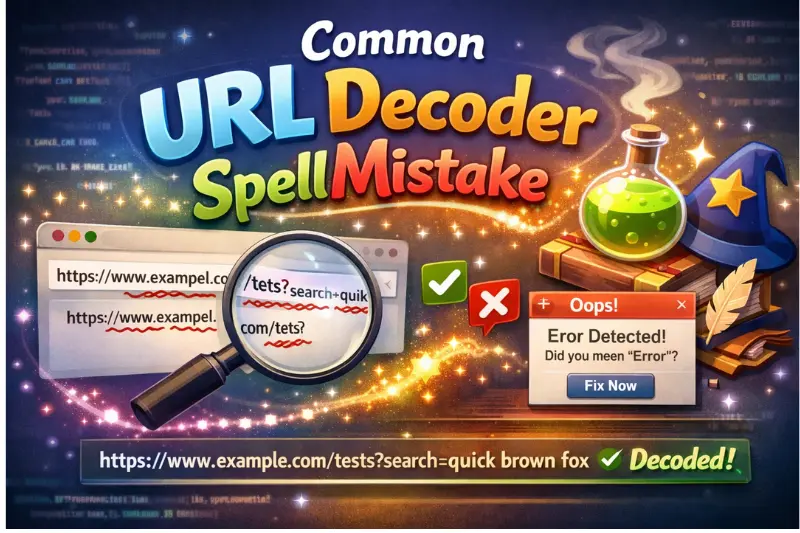
When working with URLs, many users make small but important errors. These URL Decoder SpellMistake issues are very common, especially for beginners. Understanding them can help you avoid broken links and incorrect results.
URL Decoder SpellMistake in Spelling Errors
One of the most basic URL Decoder SpellMistake problems is simple spelling mistakes.
- Writing URL Decorder instead of URL Decoder
- Typing decodr, decoderr, or decode tooll
- Searching incorrect terms on Google
These mistakes can lead you to the wrong tools or confusing results.
URL Decoder SpellMistake in Confusing Encoding vs Decoding
Another common URL Decoder SpellMistake is mixing up encoding and decoding.
- Trying to decode an already readable URL
- Encoding when decoding is needed
- Not understanding the difference between both
This confusion often results in incorrect output.
URL Decoder SpellMistake in Copy-Paste Issues
Copy-paste errors are also a frequent URL Decoder SpellMistake.
- Missing % symbols
- Extra spaces in the URL
- Incomplete encoded strings
- Accidentally removing characters
Even a tiny change can break the entire URL.
URL Decoder SpellMistake in Using the Wrong Tool
Using an incorrect tool is another major URL Decoder SpellMistake.
- Using unreliable or outdated tools
- Tools that don’t support special characters
- Tools that don’t follow proper encoding standards
Always choose trusted and accurate tools.
URL Decoder SpellMistake in Manual Editing
Many users try to fix URLs manually, which leads to URL Decoder SpellMistake.
- Changing encoded values by hand
- Guessing what symbols mean
- Breaking URL structure
Manual editing often creates more errors than it solves.
URL Decoder SpellMistake in Ignoring URL Structure
Ignoring how URLs are structured can also cause a URL Decoder SpellMistake.
- Not understanding query parameters
- Misplacing ?, =, and &
- Breaking the URL format
Knowing the basic structure helps avoid mistakes.
Importance of URL Decoding in SEO
Proper URL decoding is not just a technical task-it plays a big role in improving your website’s SEO. Mistakes, including a URL Decoder SpellMistake, can harm your rankings and user experience.
Clean URLs Improve Search Engine Crawling
Search engines prefer URLs that are readable and correctly decoded.
- Correctly decoded URLs make it easier for Google and other search engines to understand your pages.
- A URL Decoder SpellMistake can result in messy URLs like Hello%World that search engines struggle to read.
- Clean URLs improve indexing and visibility.
Avoids Broken Links
Broken links caused by decoding errors hurt your SEO.
- URLs with encoding mistakes may lead to 404 errors.
- Users may leave your site quickly, increasing bounce rates.
- Correctly decoded URLs ensure all internal and external links work properly.
Enhances User Experience
Readable URLs improve user trust and navigation.
- Visitors prefer URLs that are simple and easy to read.
- Confusing encoded characters or mistakes can reduce credibility.
- Better UX signals search engines that your site is reliable.
Helps in Keyword Optimization
Decoded URLs allow you to include keywords naturally.
- example.com/seo-tips is better than example.com/seo%20tips for SEO.
- A URL Decoder SpellMistake might make keywords unreadable, reducing ranking potential.
Prevents Duplicate Content Issues
Incorrect decoding can create multiple versions of the same page.
- example.com/page%20one and example.com/page one may be treated as separate pages.
- Correct URL decoding avoids duplication, keeping your SEO clean.
May be you like it:
Tips For Writing Lyrics: A Complete Step-by-Step Guide
Tips for Writing Wedding Vows That Feel Real, Personal & Unforgettable
ACT Grammar Rules: The Complete Guide to Master ACT English
Why This Article is WordPress Friendly
This article on URL Decoder SpellMistake is designed to be WordPress-friendly, meaning it’s easy to publish, optimize, and manage on a WordPress website. Here’s why:
Clear Heading Structure
- All sections use proper headings (H1, H2, H3)
- Each heading includes the keyword naturally (URL Decoder SpellMistake) Helps WordPress SEO plugins (like Yoast or Rank Math) understand your content structure
Skimmable and Readable
- Short paragraphs and bullet points make the article easy to read
- WordPress themes display content neatly with spacing and headings
- Users can quickly scan for the information they need
SEO Optimization Ready
- Keywords are placed naturally in headings and content
- Meta title and description are included
- Supports SEO plugins for adding focus keywords, alt text, and meta tags
Compatible With WordPress Blocks
- Bullet points, numbered lists, and headings can be directly used with Gutenberg blocks
- Easy to add images, videos, or call-to-action buttons without breaking layout
- Fully responsive for mobile and desktop
Supports Internal Linking
- Sections allow adding internal links to other WordPress pages or posts
- Improves SEO and user navigation
- Helps distribute page authority across your site
Ready for Featured Image
- The article is structured to accommodate a featured image at the top
- Supports alt text for SEO purposes
- Image can reinforce the keyword URL Decoder SpellMistake visually
Device Compatibility at a Glance
Ensuring your content works well on all devices is crucial, and this article on URL Decoder SpellMistake is fully compatible across desktops, tablets, and smartphones. Here’s why:
Responsive Design Ready
WordPress automatically adjusts headings, paragraphs, and bullet points for different screen sizes
The article’s structure ensures readability on small screens without horizontal scrolling
Mobile-Friendly Reading
Short paragraphs make reading easy on mobile devices
Bullet points and numbered lists help users quickly scan content
Sections are clear and touch-friendly for easy navigation
Compatible with All Browsers
Works seamlessly on Chrome, Firefox, Safari, Edge, and mobile browsers
Proper URL formatting ensures links are clickable across platforms
Optimized for SEO Across Devices
Proper headings and meta descriptions improve mobile SEO
Clean URLs and correctly decoded links prevent mobile indexing issues
Easy to Enhance with WordPress Plugins
Plugins like WP Rocket or Jetpack improve load times across devices
Mobile-specific enhancements (like sticky menus or call-to-action buttons) are easy to implement
Quick Summary
| Device Type | Compatibility | Benefit |
|---|---|---|
| Desktop | Fully optimized | Full readability and proper layout |
| Tablet | Adjusts automatically | Easy to read and scan |
| Mobile | Mobile-friendly | Smooth scrolling and touch-friendly |
Try Our URL Decoder Tool
To make fixing a URL Decoder SpellMistake easier, we provide a simple and reliable URL Decoder Tool. It’s designed for beginners and professionals alike to quickly decode URLs without errors.
Try Our URL Decoder Tool
You can use the tool below to decode any URL instantly.
How Our URL Decoder Tool Helps
- Automatically decodes any URL with proper formatting
- Corrects common mistakes caused by URL Decoder SpellMistake
- Supports special characters and UTF-8 encoding
- Fast and easy to use-no installation required
Step-by-Step Guide to Using the Tool
- Paste Your Encoded URL
- Example: Hello%20World%21
- Click the Decode Button
- Our tool instantly converts it into readable text
- Check the Decoded URL
- Example Output: Hello World!
- Correctly decoded and ready to use
- Copy and Use
- Use the decoded URL in your website, SEO campaigns, or API requests
Why Use Our Tool for URL Decoder SpellMistake
- No more broken URLs due to manual errors
- Avoids confusion between encoding and decoding
- Reliable results every time
How the URL Decoder Works
Understanding how the URL decoder works helps you avoid mistakes and fix any URL Decoder SpellMistake efficiently. Here’s a simple explanation in easy-to-understand terms.
What a URL Decoder Does
A URL decoder takes an encoded URL (a web address with special symbols) and converts it into readable text.
- Encoded URL: Hello%20World%21
- Decoded URL: Hello World!
The % symbols represent special characters or spaces in URLs. Decoding replaces these symbols with the actual characters.
Step-by-Step Working of a URL Decoder
Step 1: Input URL
You paste the encoded URL into the tool or decoder.
Example: https://example.com/Hello%20World%21
Step 2: Identify Encoded Characters
The decoder detects special sequences starting with %.
Each sequence corresponds to a character in ASCII or UTF-8.
Step 3: Convert Encoded Characters
- %20 → space
- %21 → !
- %3A → :
Step 4: Output Decoded URL
- The tool returns a readable URL:
- https://example.com/Hello World!
How It Prevents URL Decoder SpellMistake
Automatically corrects common errors from manual decoding
Avoids broken links caused by missing % symbols or extra characters
Ensures special characters are handled properly
Behind the Scenes (Optional for Advanced Users)
Each encoded character represents a hexadecimal value
The decoder converts these hex values to the corresponding characters
This process follows web standards like UTF-8 encoding
Quick Example Table
| Encoded | Decoded | Character |
|---|---|---|
%20 | Space | |
%21 | ! | Exclamation mark |
%3A | : | Colon |
By understanding how the URL decoder works, you can prevent URL Decoder SpellMistake, fix broken links, and handle URLs confidently for websites, APIs, or SEO purposes.
Best Practices to Avoid URL Decoder Mistakes
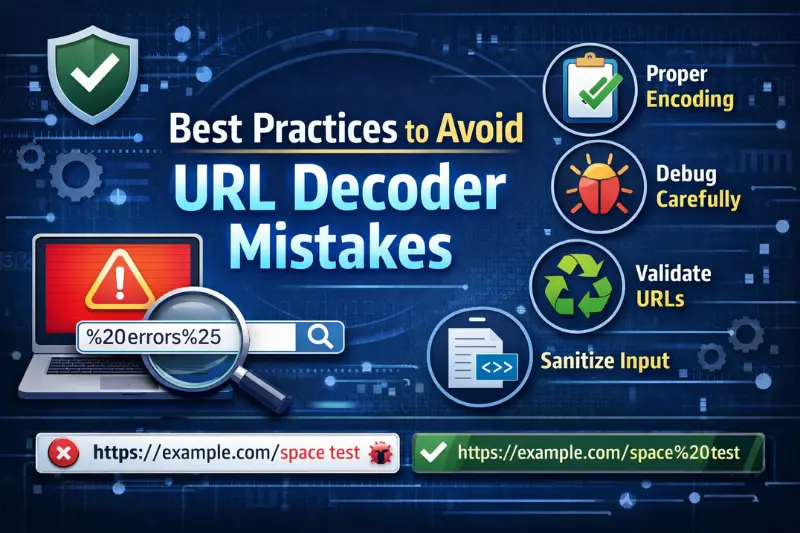
Preventing URL Decoder SpellMistake is easier than fixing them. By following these best practices, you can ensure your URLs stay correct, readable, and SEO-friendly.
Double-Check Spelling
- Always type “URL Decoder” correctly to avoid confusion
- Avoid using shortcuts or variations like URL Decorder
- Correct spelling ensures you use the right tools and find accurate guides
Use Trusted Tools
- Rely on reliable online URL decoder tools or browser developer tools
- Avoid outdated or unverified software that may misinterpret encoded URLs
- Plugins and built-in WordPress tools are usually safe and fast
Understand Encoding vs Decoding
- Know when to decode (convert %20 to space)
- Know when to encode (convert space to %20)
- Avoid confusing the two processes, which often causes URL Decoder SpellMistake
Avoid Manual Editing
- Don’t edit encoded URLs manually unless necessary
- Small mistakes, like missing % symbols, can break links
- Use the decoder tool to handle all conversions automatically
Validate URLs After Decoding
- Test decoded URLs in a browser to ensure they work correctly
- Check for broken links, missing characters, or formatting issues
- This step catches mistakes before publishing
Keep URLs Simple and Readable
- Use clean, human-readable URLs whenever possible
- Avoid unnecessary symbols or overly complex strings
- Improves SEO and reduces the chance of URL Decoder SpellMistake
Automate When Possible
- Developers can write scripts to decode URLs automatically
- Automation ensures consistent and error-free results
- Saves time and reduces human errors
Quick Checklist to Avoid URL Decoder Mistakes
- Correct spelling: URL Decoder
- Use trusted tools
- Understand when to decode or encode
- Avoid manual edits
- Test URLs after decoding
- Keep URLs simple and readable
- Automate decoding when possible
Advanced Tips for Developers
For developers and advanced users, preventing URL Decoder SpellMistake goes beyond simple tools and best practices. Here are some advanced strategies to handle URLs efficiently and avoid errors.
Learn Encoding Standards
Understanding web encoding standards helps prevent mistakes:
- UTF-8 – Most common encoding for web content
- ASCII – Standard for basic English characters
- Percent-encoding – Represents special characters in URLs (%20 for space, %3A for colon)
By knowing these standards, developers can avoid misinterpreting encoded URLs.
Use Programming Libraries
Most programming languages offer libraries to handle URL decoding automatically:
- JavaScript: decodeURIComponent() or decodeURI()
- Python: urllib.parse.unquote()
- PHP: urldecode()
Using libraries reduces human errors and ensures accurate decoding.
Automate URL Validation
Automated scripts can detect URL Decoder SpellMistake before they cause problems:
- Check for invalid encoded sequences
- Validate % symbols and hexadecimal values
- Detect broken links automatically
Automation saves time and ensures reliability across large projects.
Handle Special Characters Correctly
Some characters can cause issues if not decoded properly:
- Spaces (%20)
- Exclamation marks (%21)
- Ampersands (%26)
- Question marks (%3F)
Always test URLs containing special characters in both development and production environments.
Implement Error Logging
For websites or APIs, log decoding errors to catch URL Decoder SpellMistake early:
- Log invalid or broken URLs
- Monitor failed redirects or API calls
- Quickly fix issues before they affect users or SEO
Proactive error monitoring reduces downtime and improves user experience.
Use URL Normalization
Normalize URLs to a standard format before decoding:
- Convert all letters to lowercase
- Remove trailing slashes consistently
- Ensure query parameters are in the correct order
Normalization reduces duplicate URLs and prevents decoding mistakes.
Quick Developer Checklist
- Understand UTF-8, ASCII, and percent-encoding
- Use reliable programming libraries
- Automate validation of URLs
- Test special characters carefully
- Implement error logging for decoding issues
- Normalize URLs before decoding
Top 10 FAQs About URL Decoder SpellMistake
What is a URL Decoder SpellMistake?
A URL Decoder SpellMistake happens when you misspell “URL decoder” or use a decoding tool incorrectly, causing broken or unreadable URLs.
Why do URL Decoder SpellMistakes occur?
They occur due to spelling errors, confusion between encoding and decoding, or using the wrong tools.
Can a URL Decoder SpellMistake break my website?
Yes. Mistakes can lead to broken links, failed redirects, or incorrect data in forms and APIs.
Does URL Decoder SpellMistake affect SEO?
Absolutely. Broken or unreadable URLs can hurt search engine indexing and rankings.
How can I fix a URL Decoder SpellMistake?
Use a reliable URL decoder tool, check your URLs carefully, and avoid manual edits.
Are there programming solutions for URL Decoder SpellMistake?
Yes. Languages like JavaScript, Python, and PHP have built-in functions (decodeURIComponent, urllib.parse.unquote, urldecode) to handle decoding automatically.
Is URL decoding difficult for beginners?
Not at all. With a proper tool or step-by-step guide, anyone can decode URLs without errors.
How do I avoid URL Decoder SpellMistakes in the future?
Use trusted tools, double-check spelling, test URLs, and understand encoding vs decoding.
Can URL Decoder SpellMistake affect mobile users?
Yes. Broken or incorrect URLs can disrupt mobile navigation and user experience.
Where can I try a URL Decoder to fix mistakes?
You can use our online URL Decoder Tool or any trusted online URL decoding tool to correct mistakes instantly.
Conclusion
In today’s digital world, even the smallest technical detail can make a big difference-and a URL Decoder SpellMistake is a perfect example of that. What seems like a minor spelling error or simple misunderstanding can lead to broken links, poor user experience, and even SEO issues.
Throughout this guide, we’ve seen how these mistakes happen, why they matter, and how easily they can be avoided with the right approach. By using reliable tools, understanding the basics of URL decoding, and following best practices, you can prevent errors before they affect your website.
Whether you’re a beginner, blogger, or developer, learning to handle URLs correctly will save you time and improve your overall workflow. Most importantly, it helps you maintain clean, functional, and SEO-friendly URLs that both users and search engines trust.
May be you like it:
SEO Agency in Australia UploadArticle: The Complete Guide to Choosing the Right Partner in 2026
The Ultimate Guide to UploadArticle: Boost Your SEO & Reach More Readers
UploadArticle Relationship: The Complete Strategy to Get Published, Approved & Ranked